

Key Takeaways
- None of the earliest termite warning signs are dramatic — that's precisely why homeowners miss them until damage is already significant.
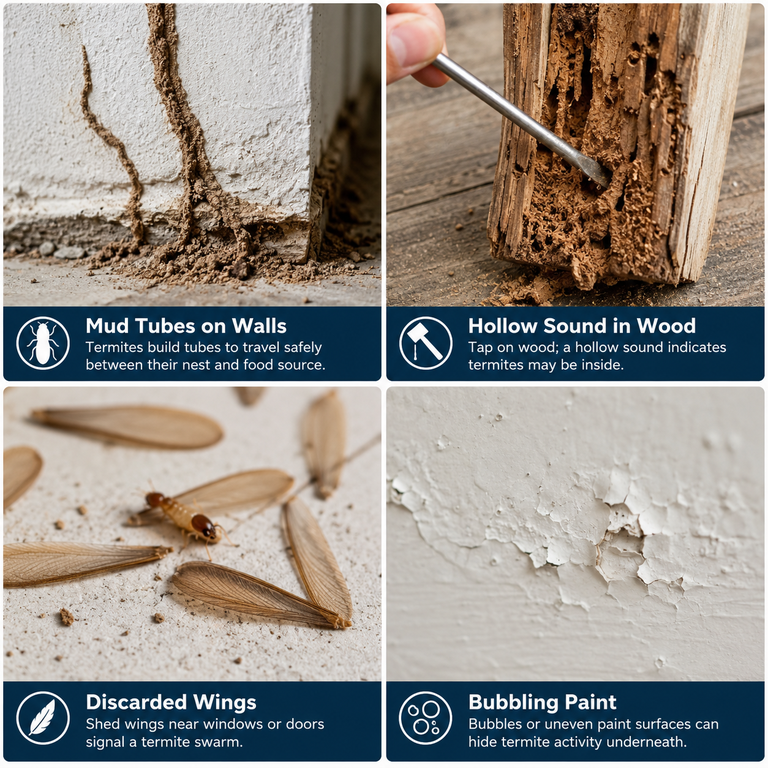
- Mud tubes, hollow-sounding wood, discarded wings, and bubbling paint are the four most commonly missed early signs.
- Termites feed from the inside out, so wood can look structurally fine on the surface while being hollowed out underneath.
- By the time visible sagging, buckling, or crumbling wood appears, a colony has often been active for a long time already.
Termite damage doesn't announce itself. There's no single dramatic moment where a homeowner suddenly notices a problem — instead, there's a set of small, easy-to-dismiss signals that accumulate quietly for months or years before anything looks obviously wrong. Here's what those signals actually look like, so you can catch them before the damage does.
Dealing with this pest at your property?
Get a same-day inspection and written quotation.
1. Mud Tubes Along Walls or Foundations
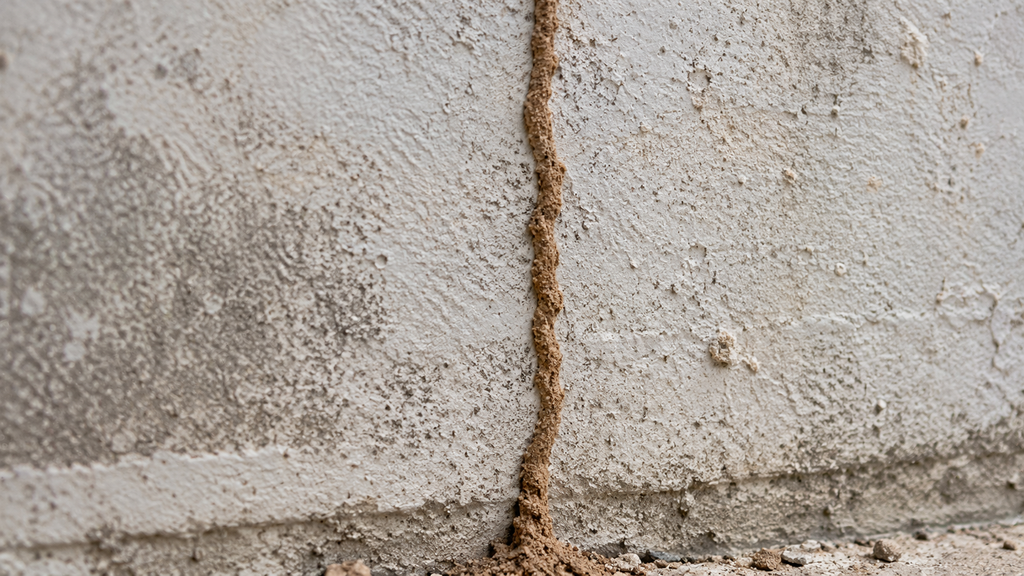
Subterranean termites — including Coptotermes heimi, one of the dominant species in Rajasthan — build pencil-thin mud tubes to travel between their underground colony and an above-ground food source, like a wooden door frame, a tree, or your home's structural timber (Orkin — What Are Termite Mud Tubes). Look specifically where the ground meets an exterior wall, around foundation vents, and near any wood-to-soil contact point. A single thin tube is easy to mistake for dirt residue or an old irrigation mark — it isn't.
2. Wood That Sounds Hollow When Tapped
Termites feed on wood from the inside out, which means a door frame, window sill, or skirting board can look completely intact on the surface while being substantially hollowed out underneath (Terminix — Signs of Termite Infestations). Tap along wooden door and window frames, especially ground-floor ones, with a knuckle or the handle of a screwdriver. A dull, hollow, or papery sound where you'd expect a solid thud is worth a closer look.
3. Discarded Wings Near Windowsills
When a termite colony matures, it produces winged reproductives (alates) that swarm to establish new colonies. Once they land somewhere suitable, they shed their wings — and those discarded wings, often near windowsills, light fixtures, or entry points, are frequently the very first visible sign a homeowner notices (Orkin — Termite Mud Tubes). In Rajasthan, this is most likely to show up during the pre-monsoon-to-monsoon window (roughly May through August), when swarming activity peaks.
4. Bubbling or Uneven Paint
Termite tunneling and moisture buildup just beneath a painted wood surface can cause the paint to bubble or look subtly warped, even without any visible wood damage yet (Bug Busters USA — 6 Early Warning Signs). This one is especially easy to misattribute to ordinary moisture damage or poor paint quality, which is exactly why it gets missed.
5. Unexplained Frass Near Wood Surfaces
Frass — termite droppings, which look like small, granular pellets — often accumulates in small piles near an active feeding site, particularly with drywood termite activity. It's frequently mistaken for sawdust or dirt and swept away without a second thought.
6. Doors and Windows That Suddenly Stick
Termite tunneling can warp wooden frames just enough to make a door or window that used to open smoothly start sticking. It's an easy sign to blame on humidity or seasonal wood swelling — which does happen too — but a frame that sticks and stays stuck, especially outside the monsoon months, is worth checking more carefully.
| Warning Sign | How to Spot It | Common Misconception |
| Mud Tubes | Pencil-thin mud pathways along foundations, soil line, and wooden door frames built by subterranean termites. | Dismissed as ordinary dirt residue or old irrigation stains. |
| Hollow-Sounding Wood | Tapping door/window frames with a knuckle or screwdriver handle produces a papery or hollow echo. | Wood appears solid and completely fine on the surface. |
| Discarded Wings | Small shed wings found near windowsills, light fixtures, and entry thresholds during May–August swarms. | Swept away as general outdoor insect debris. |
| Bubbling / Warped Paint | Moisture accumulation and tunneling beneath painted timber cause subtle paint bubbling. | Blamed on household humidity or poor paint quality. |
| Frass (Termite Droppings) | Small granular, pellet-like droppings accumulating near wooden fixtures. | Mistaken for ordinary sawdust or dust piles. |
| Sticking Doors & Windows | Frames warp subtly due to interior tunneling, causing doors and windows to bind. | Attributed purely to seasonal wood swelling or monsoon humidity. |
Why These Signs Get Missed
None of them are dramatic, which is exactly why they get missed — termites operate silently inside walls, beneath floors, and behind baseboards, consuming wood from the inside out, and by the time obviously visible damage appears (sagging floors, crumbling trim, buckling structural wood), a colony may have been active for a long time (Palisade Pest — Early Signs of a Termite Infestation Most Homeowners Miss). In Rajasthan specifically, the state's dry climate for most of the year means visible above-ground activity — like swarms — is concentrated into a fairly narrow monsoon window, so the quieter signs (mud tubes, hollow wood, frass) are often the only ones present the rest of the year.
If you're building new rather than checking an existing home, prevention through pre-construction treatment avoids this problem altogether — see Pre- vs Post-Construction Termite Treatment: Which Is Right?. If you've spotted one or more of these signs already, Termite Control Cost in Jaipur (2026 Pricing Guide) covers what treatment is likely to cost based on severity.
For the broader picture of why these signs show up when they do in Rajasthan specifically, see Rajasthan's Climate & Termite Risk: When to Treat, or start from our pillar guide to termite control in Rajasthan for the full homeowner and business overview.
FAQ
How often should I check for these signs myself?
A quick walk-through every few months is reasonable for most homes, with closer attention just before and during the monsoon window (roughly May–September), when swarming and above-ground activity are more likely.
Is it normal to have zero visible signs even with an active infestation?
Yes — subterranean termites in particular can be active for a long time with no above-ground evidence at all, especially in walls or under flooring you can't easily inspect. A professional inspection can check areas a visual walk-through can't.
If I find one dead termite or one wing, does that mean I have an infestation?
Not necessarily on its own, but it's worth investigating further rather than dismissing — a single discarded wing near a window is one of the signs most likely to be an early indicator rather than a false alarm.
Sources
- Orkin — What Are Termite Mud Tubes
- Terminix — Signs of Termite Infestations
- Bug Busters USA — 6 Early Warning Signs of a Termite Infestation
- Palisade Pest — Early Signs of a Termite Infestation Most Homeowners Miss