

Key Takeaways
- Termite foraging and colony-building activity concentrates in the 25–35°C temperature range and roughly 50–70% ambient humidity — conditions Rajasthan only sustains for part of the year.
- Jaipur's monsoon season (mid-June to mid-September) brings both the humidity termites need for above-ground activity and the specific trigger for swarming flights.
- Desert-adapted subterranean termites need less moisture contact than their eastern counterparts, which is part of why they survive Rajasthan's long dry season and then surge when moisture becomes available.
- The best time to schedule preventive treatment is before the monsoon, not during or after it — by the time swarming is visible, a colony has often already been established.
Dealing with this pest at your property?
Get a same-day inspection and written quotation.
Generic termite advice written for humid coastal cities doesn't map cleanly onto Rajasthan. The state's climate is hot and semi-arid for most of the year, then shifts sharply during a compressed monsoon window — and that swing is exactly what shapes when termites are active and when treatment actually does the most good.
Rajasthan's Climate, in Numbers
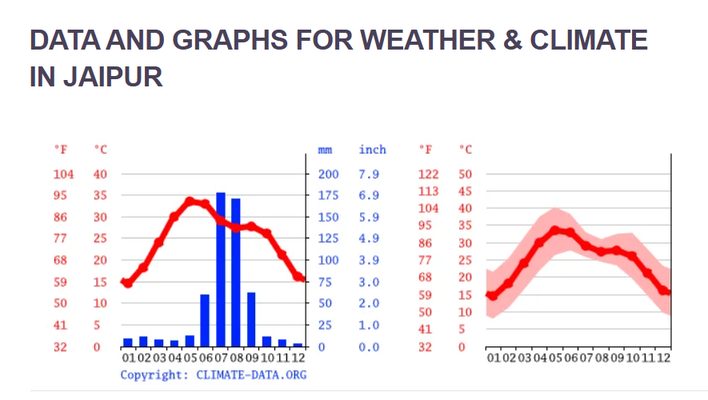
Jaipur has a hot semi-arid climate. From mid-March to mid-June, temperatures regularly exceed 37°C and can reach or exceed 45°C in the hottest stretches; May is typically the hottest month, averaging around 33.6°C, while January is the coolest, averaging around 14.6°C (Climate-data.org — Jaipur Climate).
Humidity follows an even sharper curve. Relative humidity stays low for most of the year — dropping to around 18% in April — but climbs to its yearly peak of roughly 67–76% in August, during the monsoon (Climate-data.org — Jaipur Climate). The rainy season itself runs from approximately mid-June to mid-September, bringing around 330mm of precipitation with frequent thunderstorms concentrated in August and September (Climate-data.org — Jaipur Climate).
Why That Swing Matters for Termites
Termites are highly sensitive to both variables. Ambient temperatures between roughly 25°C and 35°C support termite foraging, building, and reproductive activity, and termites generally prefer ambient humidity of about 50–70% to sustain above-ground movement and maintain moisture in their nests (Rentokil PCI — Does Monsoon Increase Termite Activity?). Rajasthan sits outside that humidity band for much of the year — which is part of why termite activity isn't constant, but concentrated.
Swarming — the dramatic, visible flights that produce the discarded wings homeowners notice indoors — is a seasonal event driven by the combination of rainfall, temperature, and humidity. In India specifically, swarming in several termite species has been observed concentrated in the pre-monsoon-to-monsoon window, roughly May to August, with warmer temperatures and low wind also contributing to timing (ResearchGate — Swarming Flights and Environmental Factors). The onset of monsoon rain in particular tends to coincide with a visible spike in flying termite sightings, since the combined moisture and warmth create near-ideal swarming conditions, and the resulting moist environment also supports faster egg and larval development, accelerating colony growth (Rentokil PCI).
If a swarm or active moisture problem has already prompted you to look into treatment, see Termite Control Cost in Jaipur (2026 Pricing Guide) for what to expect on pricing.
How Rajasthan's Species Handle the Dry Months
The two species most responsible for termite damage locally — Odontotermes obesus and Coptotermes heimi — are both documented across Rajasthan and neighboring states (ResearchGate — Economically Important Termite Species in India). Subterranean termites adapted to arid regions generally need less moisture contact than their counterparts in wetter climates — an adaptation that lets them colonize areas other subterranean termites can't establish in, by foraging in shaded or irrigated soil pockets and reducing direct dependence on constantly moist ground (Orkin — Desert Subterranean Termites). That's the underlying reason termites don't simply disappear during Rajasthan's long dry season — they scale back activity and concentrate around whatever moisture is available (irrigated gardens, plumbing leaks, AC condensation lines) rather than going dormant entirely.
When to Actually Schedule Treatment
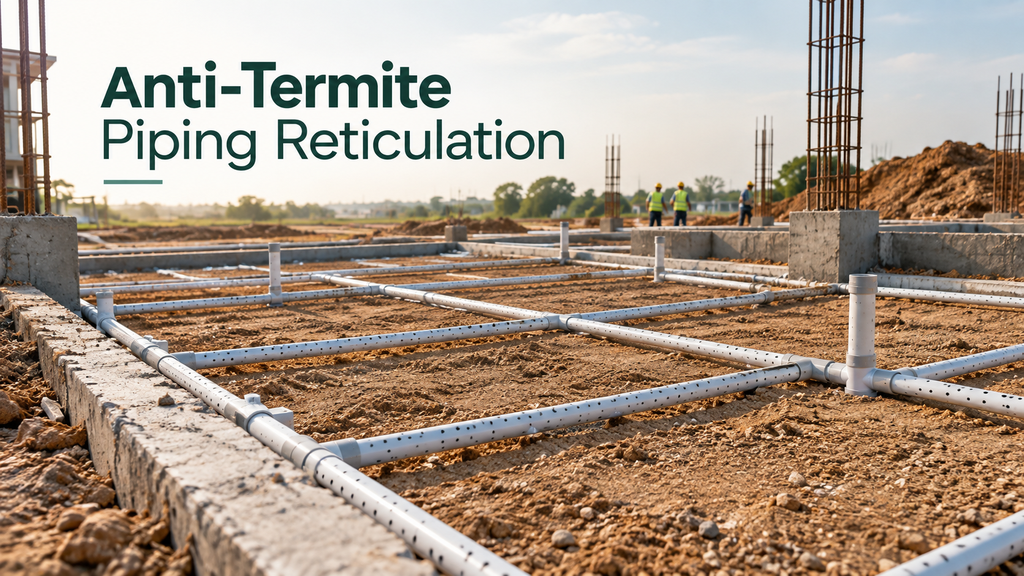
The practical takeaway is straightforward: schedule preventive treatment and inspections before the monsoon, not during or after it. By the time a swarm is visible indoors, the colony that produced it has typically already been established for some time — the swarm is a symptom of an existing colony reaching maturity, not the start of the problem. Pre-monsoon treatment (roughly February through May, ahead of the mid-June onset) also avoids the practical complications of applying soil treatments during active rainfall.
This doesn't mean treatment outside that window is pointless — an active, visible infestation should be addressed immediately regardless of season. But for planned preventive work or a new-construction pre-treatment, timing it ahead of the monsoon gets more value from the same treatment.
For the full Rajasthan termite picture — homeowner and business guidance, cost, and treatment options together — see our pillar guide to termite control in Rajasthan. And since many of the physical warning signs overlap with this seasonal pattern, see Signs of Termite Damage Homeowners in Jaipur Miss for what to check regardless of the time of year.
FAQ
Does Rajasthan's dry climate mean termite risk is lower than in humid states?
Not necessarily lower — different. Activity is more concentrated around the monsoon window and around any consistent moisture source (irrigation, leaks, AC drainage) rather than being spread evenly across the year the way it might be in a consistently humid region.
If I see termite swarms indoors, does that mean the infestation just started?
No — swarming is typically a sign of an established, maturing colony, not a new one. It's a strong signal to act, not evidence the problem is new.
Is monsoon a bad time to get a termite inspection?
Inspection is fine year-round, and an active infestation should be treated whenever it's found. It's specifically preventive soil treatment that's easier to apply and plan for before the rains start.
Sources
- Climate-data.org — Jaipur Climate
- Rentokil PCI — Does Monsoon Increase Termite Activity?
- ResearchGate — Swarming Flights and the Environmental Factors Affecting Their Timing
- ResearchGate — Economically Important Termite Species in India
- Orkin — Desert Subterranean Termites: Identification & Control