
Key Takeaways
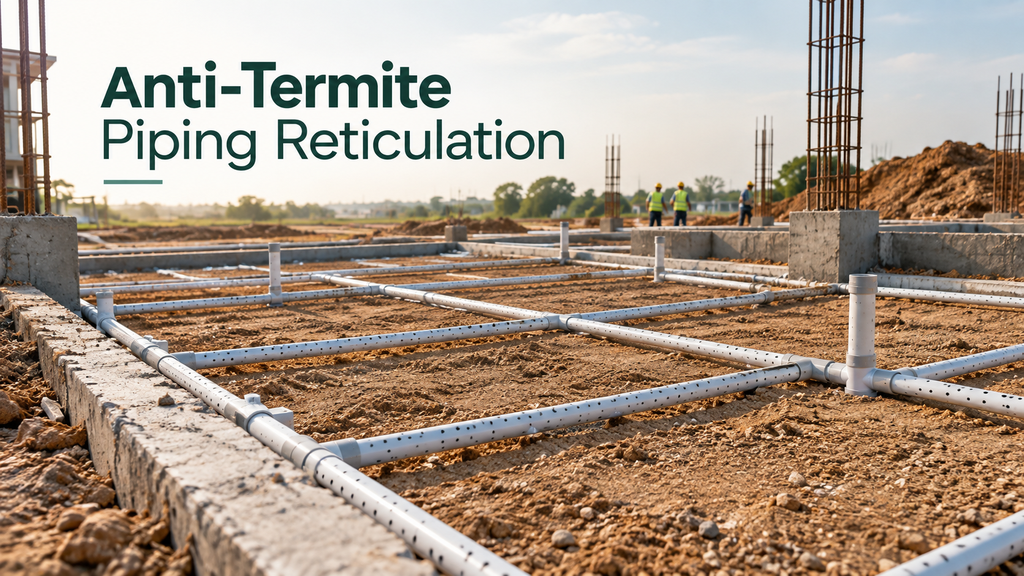
- An anti-termite piping (reticulation) system is a network of perforated pipes installed under a foundation before the slab is poured, letting termiticide be injected and refreshed for years without excavation.
- This is a pre-construction-only product — once the slab is down and finished, this specific system is no longer installable.
- Pre-construction anti-termite treatment (piping included) typically costs roughly ₹6–₹10 per sq ft of plinth area, though quoted ranges vary by provider, soil type, and property size — some sources cite ranges as wide as ₹8–₹25/sq ft.
- A properly installed system is commonly warranted for years with periodic refilling, making it dramatically cheaper over a building's lifetime than repeated post-construction treatments.
- Soil type and property size are the two biggest cost drivers — larger properties need more piping and labor, and certain soil types complicate installation and increase termiticide volume needed.
If you're at the foundation stage of a build, this is the single highest-leverage pest decision you'll make on the project — not because termites are guaranteed, but because this specific defense only exists as an option right now, before the flooring goes down. See our pest control products buying guide for how this fits alongside fogging machines and bird deterrents as a product category.
Dealing with this pest at your property?
Get a same-day inspection and written quotation.
How the System Actually Works
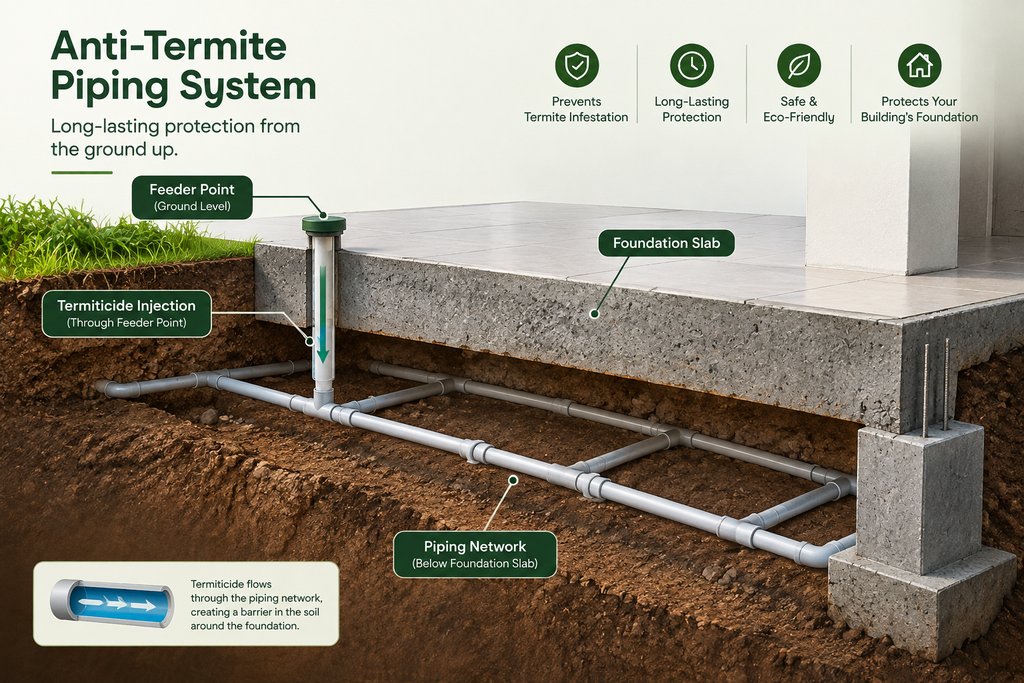
An anti-termite piping system consists of a network of pre-installed, perforated PVC pipes laid across the foundation bed, connected to accessible feeder points, that allow a technician to inject termiticide directly under the slab through emitters, without any excavation or drilling once the treatment is set up (Total Services India — Anti-Termite Piping System). The system is installed during the construction phase, before the flooring/slab is laid down (CPC India — Anti-Termite Reticulation System). Once the structure is complete, the feeder points remain accessible for periodic refilling — this is what makes the system's long-term value proposition work: instead of a one-time treatment that degrades over years, the termiticide barrier underneath the building can be topped up on a schedule without tearing anything up.
Why Timing Is the Whole Story
This system only works as a pre-construction installation. Because the pipes sit directly under the slab, they have to go in before that slab is poured — there's no retrofitting a reticulation network under a finished floor without extremely disruptive excavation, which defeats the cost and convenience advantage that makes this product worth choosing in the first place. If your property is already built, this specific product isn't available to you anymore; see Pre- vs Post-Construction Termite Treatment: Which Is Right? for what does work after the fact, and our pillar guide to termite control in Rajasthan for the full picture across both pre- and post-construction options.
What It Actually Costs
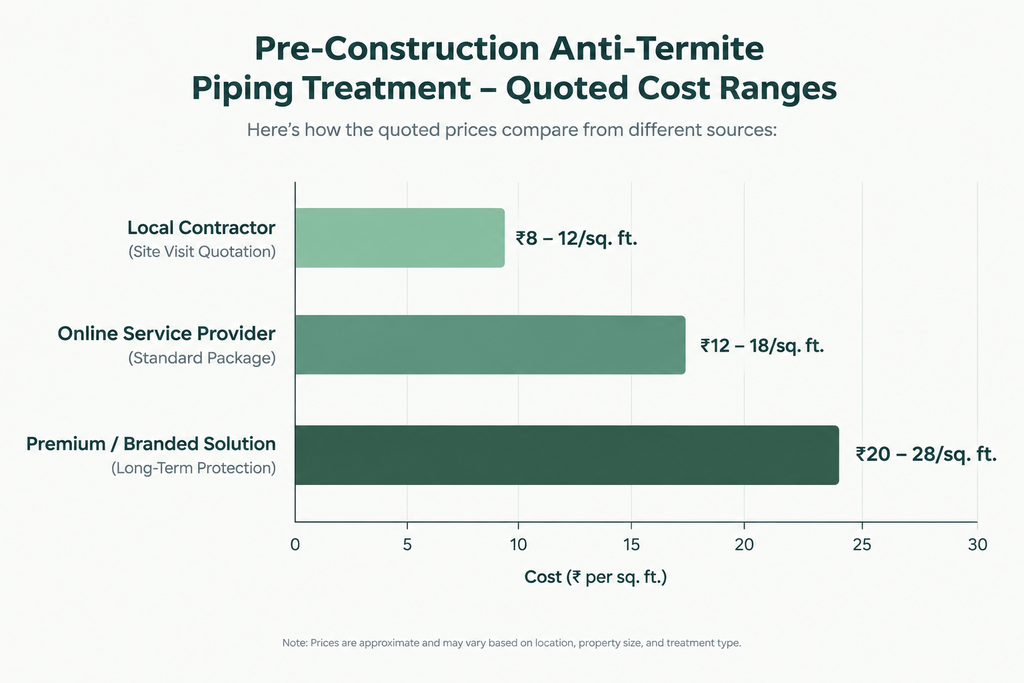
Cost estimates for pre-construction anti-termite treatment (piping-based) vary noticeably by source, provider, and region:
| Source/Context | Quoted Range |
| General pre-construction plinth-area treatment | ₹6 – ₹10 per sq ft |
| Broader pre-construction estimate (some providers) | ₹8 – ₹25 per sq ft |
| Regional example (Hyderabad) | ₹3 – ₹6 per sq ft |
The spread exists because pricing depends on plinth area (total covered floor area), soil type (certain soils require more termiticide volume and complicate pipe-laying), the specific termiticide and warranty terms offered, and regional labor/material cost differences (PestEnd — Termite Control Cost in India 2026); (HomeTriangle — Termite Control Cost in India 2026). Always get a quote scoped to your actual plinth area and soil conditions rather than comparing flat per-sq-ft numbers across providers, since the same headline rate can cover very different scopes of work.
Warranty and Long-Term Value
Properly installed piping systems are commonly warranted for extended periods with refilling on a recurring schedule — one commonly cited structure is a warranty period measured in years, with termiticide refills every few years to keep the barrier active (Total Services India). Compare that to post-construction treatment, which typically carries a shorter warranty window (often several years less) because it can't reach the full sub-slab area as thoroughly and needs to work around an already-finished structure. Over a 15–20 year horizon, pre-construction piping is very often the cheaper option once you account for how much post-construction re-treatment would otherwise cost across the same period — even though the upfront decision has to be made earlier, with less certainty about whether termites will ever actually become a problem.
Is This the Right Product for Your Project?
- Currently in the planning or foundation stage of construction: yes — this is close to a default-recommend given the cost asymmetry between doing it now versus later.
- Building in a region with known high termite pressure (much of Rajasthan qualifies): the case for installing it is stronger still — see our guide on why Rajasthan's climate makes termite risk worse for the regional data behind this.
- Already built, no current termite activity: this specific product isn't available anymore; a post-construction preventive treatment is the relevant alternative.
- Already built, with active termite damage: start with an inspection, not a product purchase — see Signs of Termite Damage Homeowners in Jaipur Miss if you're not sure whether what you're seeing is termite activity at all.
Anti-termite piping only addresses termites — if your property also needs protection against flying insects or birds, those are separate product decisions covered in our fogging machine guide and bird spikes vs netting guide.
FAQ
Can anti-termite piping be added to a house that's already built?
No- the pipe network has to sit directly beneath the foundation slab, which means it can only be installed before that slab is poured. For an existing structure, post-construction chemical treatment is the relevant option instead.
How often does the system need to be refilled?
Refill schedules are typically set by the installer as part of the warranty terms, commonly every few years, and don't require excavation since the feeder points remain accessible at ground level.
Does soil type really change the cost that much?
Yes- certain soil types require more termiticide volume and more careful pipe-laying to maintain an effective barrier, which is one of the main reasons quoted per-sq-ft rates vary between properties and regions.
Sources
- Total Services India — Anti-Termite Piping System
- CPC India Pest Control — Anti-Termite Reticulation System
- PestEnd — Termite Control Cost in India 2026: Complete Price Guide
- HomeTriangle — Termite Control Cost in India 2026: Cost, Methods, Warranty