
Key Takeaways
- Rajasthan's rodent pressure is regionally distinct: the lesser bandicoot rat (Bandicota bengalensis) now dominates the state's urban and desert cities, having displaced native desert gerbils there, while the Indian desert gerbil (Meriones hurrianae) remains predominant in Western Rajasthan's rural, rain-fed areas.
- Effective rodent control combines three things, not one: proofing against entry, trapping, and baiting — proofing alone or baiting alone rarely solves an established problem.
- Professional warehouse rodent programmes use tamper-resistant bait stations positioned along the perimeter and at high-activity zones, not open bait — open pellets are a serious hazard to pets, birds of prey, and children.
- Rodent damage in a warehouse isn't just a hygiene issue — it's a direct inventory-loss risk, and for FSSAI-licensed facilities, it's also a compliance issue.
Rodent control advice online is often generic, written for whichever species is common wherever the article's author is based. Rajasthan's rodent pressure looks meaningfully different from, say, coastal India — which matters for both identification and control strategy.
Dealing with this pest at your property?
Get a same-day inspection and written quotation.
Which Rodents Are Actually a Problem in Rajasthan
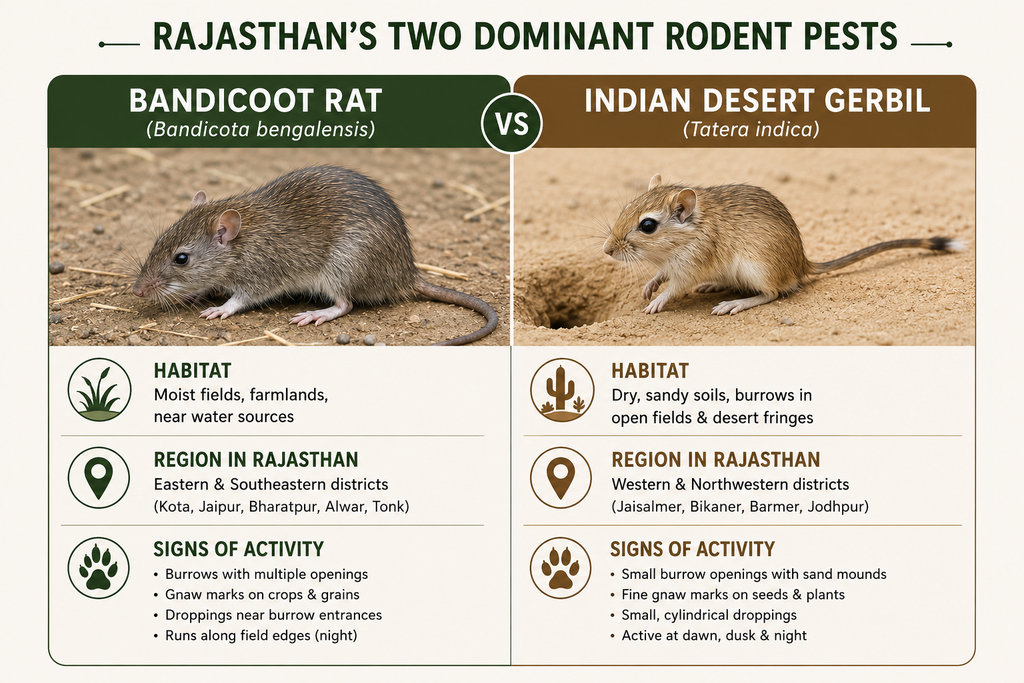
Eighteen species of rodents are recognized pests across India's agriculture, storage, and urban settings, but two matter most for Rajasthan specifically. The lesser bandicoot rat (Bandicota bengalensis) is the most predominant rodent pest of irrigated agriculture across South Asia, and in Rajasthan's desert cities it has established itself so aggressively that it has effectively displaced native gerbils in those urban environments (ResearchGate — Bio-ecology of Lesser Bandicoot Rat). It's an aggressive, dominant species and ranks as India's number-one problematic rodent pest overall, causing significant damage to rice, wheat, sugarcane, and vegetable crops wherever irrigation supports it (ResearchGate).
The Indian desert gerbil (Meriones hurrianae) tells a different regional story — it remains the predominant rodent pest in Western Rajasthan's rain-fed crops, grasslands, and forestry plantations, in contrast to the irrigated-agriculture zones where bandicoot rats have taken over (ResearchGate — Rodent Pest Species by Region). In practice, this means a Jaipur city warehouse and a rural facility on Rajasthan's western edge may be dealing with genuinely different species, which affects burrow patterns and bait placement.
Nationally, average rodent damage to food crops runs 5–10%, and the figure is higher specifically inside storage: earlier studies of Indian grain godowns found rodent-caused damage in the 10–15% range, with the lesser bandicoot rat established as a predominant pest not just in fields but inside godowns in major metropolitan cities (Springer Nature — Rodent Control in India, Integrated Pest Management Reviews). That's a useful reminder that rodent pressure in Rajasthan isn't a minor nuisance issue, particularly for any facility storing grain, packaged food, or agricultural inputs.
Why Warehouses Need a Different Approach Than Homes
A warehouse or godown faces rodent pressure at a different scale and with different stakes than a home. Effective commercial rodent management combines baiting, trapping, and proofing together — proofing against entry points is required alongside the other methods, not as a substitute for them (Wildlife Works LLC — Warehouse Rodent Control).
Proofing means sealing gaps under doors, around utility penetrations, and at loading dock edges — the same structural checks that matter for FSSAI pest control compliance generally.
Trapping provides direct population reduction and monitoring data (catch counts indicate whether the pressure is increasing or decreasing).
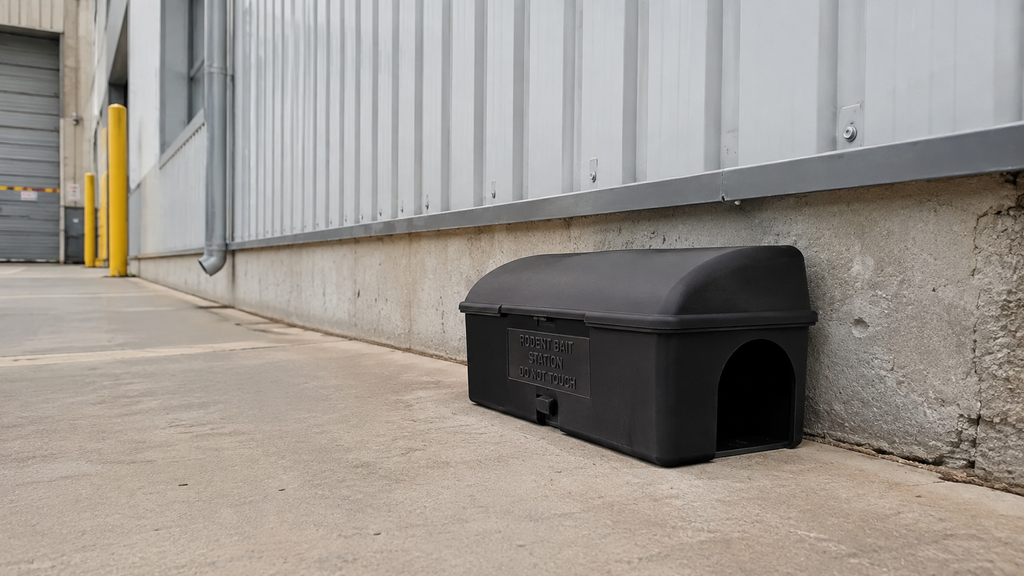
Baiting, done professionally, relies on tamper-resistant bait stations as the backbone of commercial rodent management — locked stations let rodenticide sit where rodents can access it but people and pets can't. Stations are typically positioned along the perimeter wall at regular intervals (commonly every five to ten metres, depending on activity level), near entry points, and in identified high-activity zones inside the facility (Godrej Pest Control — Rodent Control).
Rodent-proofing and structural checks overlap directly with FSSAI compliance for licensed food facilities — see FSSAI Pest Control Requirements: A Warehouse Compliance Checklist.
Rodenticide Safety: What to Ask Your Provider
The bait used in professional Indian pest control settings is typically a second-generation anticoagulant — brodifacoum or bromadiolone are the most common active ingredients (Wildlife Works LLC). These are effective, but they carry real secondary-poisoning risk: open, unsecured bait pellets can kill curious pets that eat them directly, and birds of prey or other wildlife that eat poisoned rodents — which is exactly why tamper-resistant stations, not open pellets, have been the professional standard for over 15 years (Wildlife Works LLC).
Before signing a contract, a homeowner or facility manager should ask: is bait placed in locked, tamper-resistant stations everywhere on the property? Is a station map maintained showing placement and check dates? What's the plan if bait is being taken faster than expected (a sign of a larger population than initially assessed)?
Home Rodent Control: What's Different
Homes face lower-volume but still meaningful rodent pressure, usually from the same species active locally. The core principles are the same — proof, trap, bait — but scaled down: sealing gaps around pipes and utility entries, checking under-sink and attic areas, and using enclosed bait stations (never open pellets) anywhere pets or children have access.
Rodents are rarely the only pest pressure a Rajasthan property faces alongside termites — see our pillar guide to termite control in Rajasthan for the full picture, and if you're budgeting for pest control beyond just rodents, Pest Control Cost in Jaipur: Full 2026 Price Guide by Service Type covers cockroach, bed bug, and mosquito pricing too.
FAQ
How do I know if I have bandicoot rats or a smaller rodent species?
Bandicoot rats are notably larger than common house mice and produce correspondingly larger burrow openings and droppings. A professional inspection can confirm species, which matters for choosing the right control approach.
Is DIY rodenticide safe to use at home?
Open pellet baits sold for DIY use carry real risk to pets and, in homes with children, a poisoning hazard — enclosed, tamper-resistant bait stations are the safer standard even for home use, and professional placement reduces both risk and the chance of a rodent dying somewhere inaccessible.
How often should a warehouse's rodent programme be reviewed?
Bait station checks are typically monthly at minimum, with station placement and proofing reviewed any time facility layout, storage patterns, or catch/consumption data changes meaningfully.
Sources
- ResearchGate — Bio-ecology of Lesser Bandicoot Rat, Bandicota bengalensis
- Wildlife Works LLC — Warehouse Rodent Control: How to Protect Your Facility from Rats and Mice
- Godrej Pest Control — Rodent Control
- Springer Nature — Rodent Control in India, Integrated Pest Management Reviews
- NCBI PMC — Efficacy of Management and Monitoring Methods to Prevent Post-Harvest Losses Caused by Rodents