
Key Takeaways
- Methyl bromide typically achieves full treatment in around 24 hours; phosphine can require 8 or more days of exposure and aeration.
- Methyl bromide is a significant ozone-depleting substance; phosphine is not, making it the environmentally preferred option where timelines allow.
- Phosphine resistance in stored-product pests is a documented concern that methyl bromide doesn't share.
How Do Phosphine and Methyl Bromide Actually Compare?
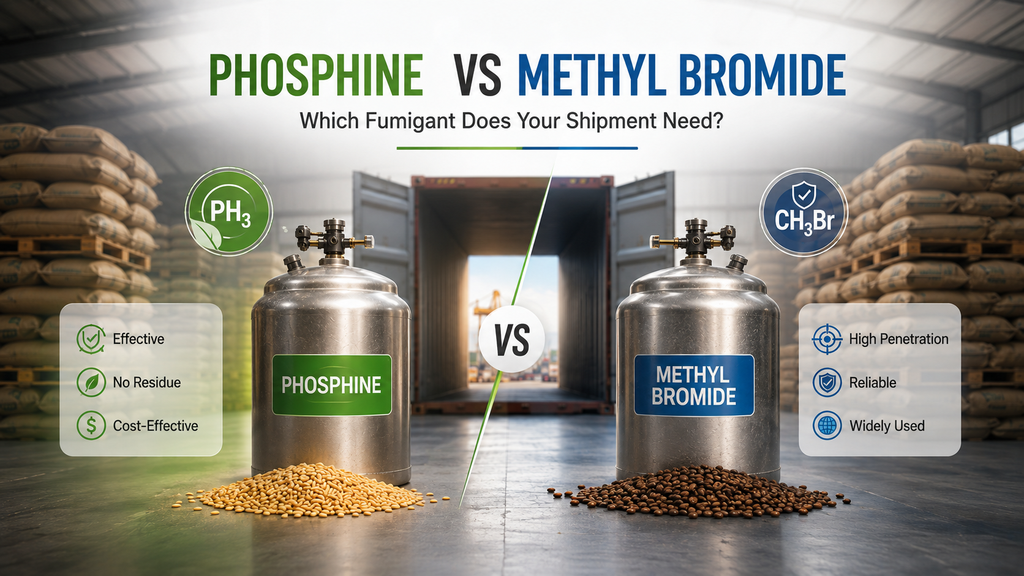
Methyl bromide is a fast-acting fumigant, typically completing treatment in around 24 hours, but it's a significant ozone-depleting substance restricted to quarantine and pre-shipment (QPS) use in India. Phosphine is not ozone-depleting and is considered the environmentally safer alternative, but it requires a substantially longer exposure and aeration period — often 8 days or more — and its efficacy drops below 15°C (ResearchGate, Phosphine as methyl bromide alternative for QPS treatment of food grains in India; Journal of Economic Entomology, MB vs Phosphine comparison study, retrieved 2026-07-21).
Dealing with this pest at your property?
Get a same-day inspection and written quotation.
Phosphine vs. Methyl Bromide: Key Differences
| Factor | Phosphine | Methyl Bromide | ||
| Treatment time | 8+ days exposure/aeration | ~24 hours | ||
| Ozone impact | Not ozone-depleting | Significant ozone-depleting substance | ||
| Low-temperature efficacy | Reduced below 15°C | Reduced below 10°C | ||
| Resistance risk | Documented resistance in stored-product pests | No comparable resistance issue | ||
| Legal use in India | General and QPS use | QPS use only, since 2010 |

When Does Methyl Bromide's Speed Actually Matter?
Methyl bromide's roughly 24-hour treatment window matters most when shipping timelines are tight — perishable or time-sensitive cargo, last-minute booking changes, or destination requirements with strict arrival windows. Phosphine's multi-day exposure requirement simply doesn't fit those situations regardless of its environmental advantage.
From our fumigation scheduling experience: The shipments where clients ask specifically for methyl bromide are almost always the ones booked with under a week of lead time before departure — phosphine's aeration window doesn't leave enough runway.
When Should You Choose Phosphine Instead?
Phosphine is the better default when your timeline allows for it — it avoids ozone-depleting chemical use entirely, which matters increasingly to destination markets and buyers scrutinizing supply-chain environmental practices, and it remains fully legal for general use, not just QPS treatments.
The environmental-impact conversation around methyl bromide isn't just regulatory — buyers in certain destination markets are starting to ask suppliers directly which fumigant was used, treating it as a supply-chain sustainability signal rather than a purely technical choice.
(methyl bromide legality FAQ → the full QPS exemption explained)
Does Fumigant Choice Depend on the Commodity Type?
Yes — some commodities and destination phytosanitary requirements specify or strongly favor one fumigant over the other, particularly where a destination country's import protocol names methyl bromide or heat treatment specifically for ISPM 15 wood packaging compliance.
This is why the decision shouldn't be made by the fumigation vendor alone based on convenience or availability — it needs to match your specific commodity, destination requirement, and shipping timeline together.
[ISPM 15 wood packaging requirements → destination requirements for wood packaging treatment codes]
Frequently Asked Questions
Is phosphine or methyl bromide better?
Neither is universally better — methyl bromide is faster (about 24 hours) but ozone-depleting and QPS-restricted; phosphine is environmentally safer but requires 8 or more days of exposure and aeration.
Why is methyl bromide restricted but phosphine isn't?
Methyl bromide is a significant ozone-depleting substance under the Montreal Protocol, restricting it to quarantine and pre-shipment use; phosphine doesn't deplete ozone and remains available for general use.
Does temperature affect fumigant choice?
Yes. Phosphine's efficacy drops below 15°C, while methyl bromide's drops below 10°C — cold-weather shipments may need this factored into fumigant selection.
Can I choose either fumigant for any shipment?
Not always — some destination countries specify a particular treatment method for ISPM 15 wood packaging or particular commodities, so the choice isn't purely a matter of exporter preference.
Where to Start
Match your fumigant choice to your actual shipping timeline and destination requirement, not availability or habit. book a compliance audit or site survey → PestPro India's audit-ready compliance service] to get a recommendation specific to your shipment.
Sources Cited
ResearchGate, Phosphine as methyl bromide alternative for QPS treatment of food grains in India, retrieved 2026-07-21
Journal of Economic Entomology, Vol. 113(2), 2020, Methyl Bromide vs Phosphine comparison study, retrieved 2026-07-21
Image credit: Pixabay License (free for commercial use) — science-1336664