
Key Takeaways
- The facility's initial audit failure cited documentation gaps under FSSAI Schedule 4, not active infestation.
- The fix centered on continuous monitoring logs between scheduled treatment visits, not more frequent treatment itself.
- This pattern — documentation gaps outpacing actual pest presence as an audit failure cause — matches what PestPro India has seen across its Jaipur and Rajasthan client base over the past year.
What Went Wrong in the Initial FSSAI Audit?
Dealing with this pest at your property?
Get a same-day inspection and written quotation.
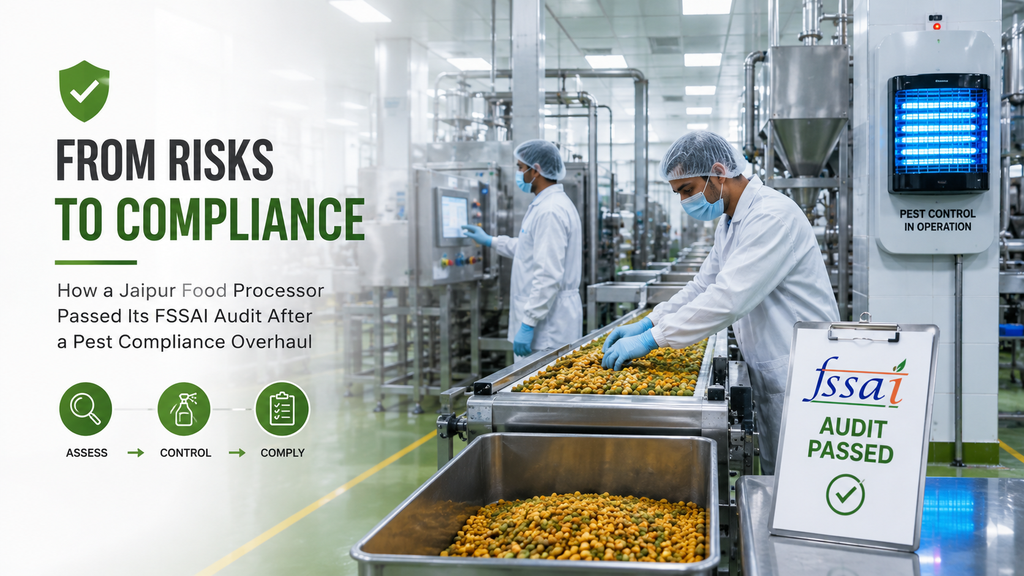
The facility's FSSAI Schedule 4 compliance review flagged an incomplete pest monitoring log — treatment visits were documented, but there was no evidence of the "continuous and effective" program Schedule 4 Part II requires between those visits (FSSAI, Schedule 4 Part II, retrieved 2026-07-21).
That gap is a subtler failure than it sounds. The facility genuinely had a pest-control vendor visiting on schedule — the problem was that nothing documented what happened in between those visits, which is precisely what a risk-based audit standard is designed to catch.

What Did the Compliance Overhaul Actually Involve?
What we changed: PestPro India restructured the facility's pest-control program around a weekly self-inspection log completed by facility staff, cross-referenced against our quarterly technician visits — closing the documentation gap between scheduled treatments that had caused the original audit failure.
The overhaul had three components:
- A weekly internal inspection checklist covering entry-point sealing and pest-sighting logs.
- A corrective-action form triggered by any sighting.
- A consolidated annual record binder combining internal logs with technician visit reports — satisfying Schedule 4's 1-year retention requirement in a single auditable location.
This pattern — treatment being fine, documentation being the actual gap — isn't unique to this facility. Among the FSSAI compliance audits PestPro India has supported for Jaipur and Rajasthan-based food processors and warehouses over the past year, incomplete or gap-filled pest-control logs have been the most frequent citation, more common than any actual pest-control deficiency
How Long Did the Re-Audit Process Take?
The documentation overhaul itself took roughly six weeks to establish a full logging cycle before the facility felt confident requesting a re-inspection — not because the fix was complicated, but because auditors want to see the new system operating consistently, not just implemented on paper the week before re-audit.
That timeline matters for any facility considering a similar fix: a documentation system needs to run long enough to generate real records before it's useful in an audit, which means starting well before your next scheduled inspection, not the week of.
What Was the Result of the Re-Audit?
The facility passed its re-audit with the pest-control documentation cited as a specific area of improvement — the underlying pest situation hadn't materially changed, but the auditable record now demonstrated the continuous program Schedule 4 requires.
The lesson generalizes beyond this one facility: an FSSAI audit failure over pest control usually isn't a signal to treat more aggressively — it's a signal to document more consistently. Conflating the two leads facilities to spend on additional treatment when the actual gap was administrative.
(RIICO industrial pest protection guide → sector-specific compliance for industrial facilities)
Frequently Asked Questions
Does failing an FSSAI audit mean pests were found?
Not necessarily. As this case shows, documentation gaps under Schedule 4's continuous-program requirement are a common failure cause independent of whether active infestation was present.
How long does a pest-control documentation overhaul take?
In this case, roughly six weeks to establish a consistent logging cycle before requesting re-inspection — auditors want to see the system operating over time, not just implemented immediately before re-audit.
What's the most common FSSAI pest-control audit failure?
Based on PestPro India's client base across Jaipur and Rajasthan, incomplete monitoring logs between scheduled treatment visits are more common than actual pest-control deficiencies.
Can a facility fix a documentation gap without changing its treatment provider?
Yes — this case involved restructuring documentation practices around an existing treatment schedule, not switching vendors or increasing treatment frequency.
Where to Start
If your last FSSAI audit cited pest-control documentation rather than active infestation, the fix is very likely a logging system, not a new treatment plan. ( book a compliance audit or site survey → PestPro India's audit-ready compliance service) to review your current documentation gap before your next inspection.
Sources Cited
- FSSAI, Schedule 4 Part II — General Hygienic and Sanitary Practices, retrieved 2026-07-21
- This case study reflects PestPro India's own client engagement; the client facility is anonymized at its request.
- Image credit: Pixabay License (free for commercial use) — handshake-5760544